

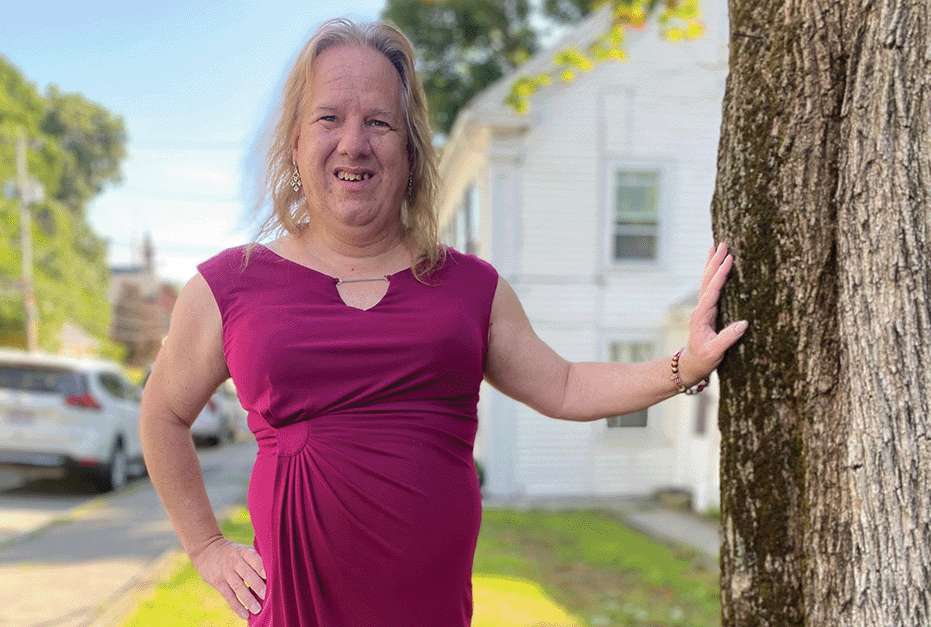
Pauline Bosma advocates to give people with IDD who are gender or sexual minorities an open environment where sexuality is part of the conversation.
Photo courtesy Pauline Bosma
Pauline Bosma is the founder and coordinator of the Rainbow Support Groups, a network for self-advocates who are members of both the intellectual and developmental disability community and LGBTQ+ community.
Bosma, who works for Massachusetts Advocates Standing Strong, identifies as a transgender woman who is labeled with an intellectual disability.
What inspired you to start the Rainbow Support Groups in 2004?
What convinced me to start them was my personal search for resources for people that identified as LGBTQ+ and also had IDD. I also started the Rainbow Support Groups to educate other people about LGBTQ+ people who have IDD.
We all need support and knowledge about what sexuality and gender is, and what they are in our lives. People with IDD are not given sexual education in schools. Most people with IDD learn about sexual education either from TV, movies or media in general.
Another reason why I did it was to give people a safe environment to talk about LGBTQ+ and IDD without being put down — to be able to have a voice on their own.
What part of your work are you most proud of?
I took a course on how to be a better leader through Leadership Series, and that made me the leader I am now.
But what I’m proud of over the past 20 years is that I have taught and talked to people all over the U.S. and other countries. I learned that people with disabilities don’t get the support and help they need when they identify as LGBTQ+ and IDD.
I’m proud that I didn’t give up on my quest to support others. Some of the other things I’m proud of are the Rainbowguidebook.com that I created with two colleagues of mine, and I gave input on a curriculum called Awareness and Action, which helps people report abuse and provides peer-to-peer training.
What would you like to tell health care professionals so that they can do a better job supporting your community?
The biggest thing is when doctors talk to staff about the patient, and not the patient themselves. They should talk to the patient, ask them how they feel and what they want the doctors to do.
My primary doctor is very helpful and honest when I’m talking to her about my LGBTQ+ issues. When I started seeing her, she told me to come in as Pauline, and not as Paul, which was very moving to me. That started a great connection, because it felt like she understood me. And I would also tell doctors to always be truthful and honest with patients.
Twenty years from now, what do you hope the world will look like for LGBTQ+ people with IDD?
I would like to see more people that identify as LGBTQ+ and IDD to get sexual education in school, and to be able to express themselves for who they are and what they are regardless of their IDD. It’s important we all try to respect and help each other.
What can the overall community do to better support LGBTQ+ people with IDD?
Be kind, be caring and look us in the eye. And be truthful and honest with us, regardless of our disabilities, because all of our disabilities are different. It’s important to recognize that we all should be respected equally.
- Copyright The Nation’s Health, American Public Health Association




Jump to section
- Top
- What inspired you to start the Rainbow Support Groups in 2004?
- What part of your work are you most proud of?
- What would you like to tell health care professionals so that they can do a better job supporting your community?
- Twenty years from now, what do you hope the world will look like for LGBTQ+ people with IDD?
- What can the overall community do to better support LGBTQ+ people with IDD?